Showing posts with label Gardening. Show all posts

Monday, March 29, 2021

Organic, Heirloom Vegetable seeds


 Just some thoughts  I would pass on.  Spring garden season is upon us, and time for seeds. Please use some thought when you purchase.  Buy the best for you, not what rich billionaires say is best. Buy heirloom organics from reputable sources, small business people who delicate their lives to this -  collecting and protecting plants. Keeping seeds pure, not Genetically altered. Example corn, altered with pig DNA  -all major brands.  Including store bought corn.


Small deticated business please.  Your growing vegetables for flavor, and vitamins store brands score low to zero on both scales.

Here are two  business's I buy from that offer good seed quality.


https://www.anniesheirloomseeds.com/


https://www.adaptiveseeds.com/


Wednesday, February 03, 2010

Finding Spring


Rose


Red Current


Bleeding heart


Crocus


I went on a" In search of----> Spring" journey, two days ago .
Took a couple of quick picks of some renewed life..
Ahhhhhh. I love this time of year everything feels so clean and smells so fresh... Something like a treasure hunt.

Along with those pictured I also saw rhododendrons pushing bud, white willows with fuzzy cat kins, red elderberry's trees pushing out leaves, red huckleberry's working on buds, most of my lilies, and Iris are popping up their green heads & lots of crocus. My bee's even took a peek out of the hive to catch a little sun as well!!

Oh, and yes I have already planted tomato seeds in the green house nursery ,and a few cucumber seeds just for good measure. I recently put in a small propane heater in the greenhouse so it keep it nice and warm...


Oh speaking of green house activities.. I have " For-Get -Me Knots flowers in bloom !!

Blessed Be
:-)

Sunday, September 06, 2009

Harvest Moon


Lady Luna was beautiful last night!!! Peaking through blues and yellow orange luminous cloud cover.... she was spectacular...
Sparkling moon beams
Bee

Monday, September 29, 2008

Harvest from RavensWood


Hi to all, Well I am done.. All is well, and all canned, frozen, dried,& baked.. I am SOOooo tried!! But Happy..

A very bad garden year here at Ravenswood. Weather was very strange?? Even my bees had a odd season. I started with three hives mid summer -->two swarmed away. Then I had a swarm come, then another? Then one swarmed away. Then another came? At any rate.... Strange? Not much honey either, not enough for me to feel right about taken any.. So I will have to make do with the remnants from last years honey crop..

The photos above are of my garden treasures in all their glory. Canned goods; apple sauce, green beans, potato's, carrotts, and apple pie filling. I froze Blue berry's, Huckle berry's and Black berry's. I had a good Apple crop the most went to apple sauce.. Yummy!! But I had a small box left over so I made a giant apple pie today --->.. Almost a food group on its own!! I had a small but nice crop of pears too.. I truly love the fall with all its scents and colors, and OH the flavors!!


Sparkling fall leaves to all -->Bee


Saturday, September 06, 2008

Last Flowers of Summer


Hi to all, I took a few snap shots of the blooms that are left in my flower gardens. I love flowers so.. I am always sad when they fade away at summers end. But the wheel must turn and I have the fall colors to look forward to, then soon after the sparkling snow of winter. We can always dream of the spring which will rise again sooner than we think.. I hope your summer was as lovely as mine was..


Much sunshine to all, from this last bit of summer .


Bee


Monday, June 02, 2008

Green House Project Update # 2


Hi to all, Well I'm up and GROWING. In the Beecharmers Green house. Hopefully by summers end I will have my proper tables, and shelves built. I have tomatoes, peppers, squash, cucumber, lettuce, carrot's, spinach, and many varieties of flowers in there. Soon to start more. My Moon flowers just sprouted a few days ago.
But other priorities are on the front. So here are a few pic's of the inside,and finished front.

Sparkles
Bee

Friday, April 25, 2008

Green House Project Update


Hi to all .. ** FINALLY ** My green house is done!!!! Not all the surrounding ground work, but most of it.. Scotch on the Rocks was doing it at the same time we were under construction with the building.. Of course he had to build a support wall, and small patio ect. ect..
I have all my plant starts in there now. I had all those in the house, and I planted some cucumber seeds today. We made temporary tables out of saw horses, and 2 by 4's for the tops. They work pretty good. I was surprised.
It is so nice, I have waited a long time for this day. Lots of fun for me now to mess around in there .. Nice and warm to -->on a cold day!!!


Sparkling Bee

Friday, March 07, 2008

Lavender Lore


"Plant rosemary by the garden gate, plant lavender for luck"


Well Bee will adds a new saying;
"Were rosemary thrives women rule the roost!"


Lavender
· Where there is lavender there is great faerie activity. These faeries bring healing, protection and help to overcome emotional blocks.


In Ireland
· English lavender is a traditional herb often used in the bouquet. Also, it is common for the bride to braid her hair; this is considered a sacred way to retain female power and luck.


Irish Lavender
· Is a striking plant forming colorful purple patches on the landscape of the Irish countryside.


England's oldest lavender farm
· Has nearly 100 acres of lavender, an essential oil distillery, fragrant, herb and riverside gardens, gift and plant shops and tearoom. Admission is free. Minibus trips to see harvest in July/August.


· Possibly because of its mentions in the Bible, lavender was said to be a charm against the devil. Lavender flowers bound into the shape of a cross were hung on doorways to deter evil spirits and in Ireland, brides wore lavender garters to protect them from witchcraft.


· It was also thought that rubbing yourself with lavender oil would attract a suitor, although, ironically, anointing oneself with lavender was also supposed to protect one's chastity and deter a suitor with dishonorable intentions. Perhaps only the right sort of person is attracted by the scent of lavender!


· Lavender is indigenous to the mountainous regions of the western Mediterranean but was thought to be first domesticated by the Arabians, then spread across Europe from Greece and was probably taken to England by the Romans.


· Lavender was a familiar plant in English gardens in the sixteenth and seventeenth centuries. In 1653, Nicholas Culpeper (The Compleat Herbal) went so far as to write, "Being an inhabitant almost in every garden, it is so well known, that it needs no description." Fifty-six years earlier, John Gerard had described three "Lavander Spikes" and three "French Lavanders" or "Stickeadoves" in The Herbal.


· Stickeadove or Sticadove was the Middle English common name for French lavender (Lavandula stoechas Linnaeus). The Romans used many kinds of lavender including a particular lavender growing in the Stoechades [ste ka' des], islands now known as ÃŽles d'Hyères. The French lavenders were called by Gerard, Stoechas, but the Roman name of the islands, and hence the herb, remained among the "simple people" as stickeadove.


· According to Mrs. Grieve (1931), by the Middle Ages, the plants were associated with St. John and branches were tossed onto bonfires on St. John's day (June 24th) to drive away "evil spirits" that may be abroad. Sprigs of lavender were a strewing herb in churches and in homes. It was sold in bunches by street vendors and placed in linen closets. Lavender was burned in sick rooms to clean the air; the powerful fragrance covered a multitude of 'sins'. Strangely, no one is certain when lavender cultivation began in England; the plants cannot survive in cold, damp climates without human intervention.


· Lavender changed our language; the roots go back to the Romans, particularly the Roman habit of washing, lavare, bathing, lavatio, and a Roman bath, lavabrum. Lavender, originally called spica for the flower spikes, was so generally associated with bathing that it became lavandula, the name retained in New Latin for the generic designation.


· According to the 1889 Century Unabridged Dictionary, in Middle English (12th to 15th centuries), washer women were called lavanders or lavenders; to lavender meant to launder, and lavatories were stone-floored rooms for washing clothes. Lavender, the plant, went along to keep the fabrics fresh-smelling (and probably to keep insects out). Gerard, living at the end of the Middle Ages, actually spelled lavender as lauander.


· Sometime after the Romans invaded Britannia (England) in 54 BCE, they discovered a hot spring and in succeeding years built a temple and bath complex with the sacred spring at its heart. There is no archaeological evidence the Romans ever cultivated lavender there, but as they imported olive oil, they may have also imported lavender.


Folklore
· Plant lavender around your house to keep away bad luck/evil spirits.Spouses who place lavender flowers between their bed sheets will never quarrel.
· Lavender will help you sleep.
· Lavender is an embalming fluid and a remedy for the plague…
· Lavender will cure insanity, an aching back, is an antiseptic, and heals wounds more quickly…
· Lavender is an aphrodisiac!
· Lavender will keep the moths away.

Tuesday, February 26, 2008

Fairy Seeds


Hi to all,

Well today on one of my many adventures to my local nursey. I saw this small display of seeds on my way to the check out counter.. I was so surprised to see this!The display held about 8 diferent types?-- of flower seeds packages in this special packaging from Burpee Seed Company.
I read on the back this product is in coralation with the estate of; Cicely Mary Barker. How cool is this??

On the back there is a tear off , on this one ---> the Forget Me Not's<--- :-) there is "The song of the Forget Me Not Fairy". I post it below. This is such a neat idea I had to share with you all!! Also here is a link that was on the back of the package to;

The Song of the Forget Me Not Fairy
Where do fairy babies lie
Til! they're old enough to fly? Here's a likely place, I think,
'Mid these flowers, blue and pink, (Pink for girls and blue for boys:
Pretty things for babies' toys!) Let us peep now, gently. Why,
Fairy baby, here you lie!
Kicking there, with no one by,
Baby dear, how good you lie! Alt alone, but, you're not—
You could never be—forgot! O how glad I am I've found you,
With Forget-me-nots around you, Blue, the colour of the sky!
Fairy baby, Hushaby!

Friday, July 13, 2007

Drawing visitors to your fairy garden


When the sunsets on the garden, the night shift begins.
Many plants bloom exclusively at night. Many more wait until evening to release their heady scent. White flowers and plants with variegated foliage glow softly as they reflect the moonlight. But for a few of our flying friends, the work goes on. The bright blooms of some plants and heavenly scent of some flowers attract NOT only fairies but--> nectar-feeding bats, owls, and crickets. These pollinators work only after dark. Other bats are drawn to the night-blooming garden to prey on insects. They each can consume 600 mosquitoes per hour.


Include plants from each of these categories:


For a night garden, alba or white flowers are used because their iridescent color will stand out in the twilight and evening darkness. Especially helpful in a night garden are flowers that have a strong sweet smell particularly at night, such as Nicotiana affinism,--> tobacco plant, Mirablis jalapa, Four o'clock flowers, Hesperis matronalis or Dame's violet or Sweet rocket.


Tobacco: (Nicotiana ) is a lovely annual with long, trumpet-like blooms valued for their intense evening fragrance.

Night Gladiolus: (Gladiolus tristus ) features creamy yellow blossoms with an intensely spicy night fragrance.

August Lily: (Hosta ) produce waxy, trumpet-shaped flowers with a honey scent.

Fragrant Columbine: (Aquilegia fragrans ) offers creamy white flowers with a rich honeysuckle scent.

Pinks: (Dianthus plumarius ) display pale pink flowers smelling of cloves.

Fairy Lily: (Chlidanths fragrans ) bears yellow, fragrant flowers on stalks in mid-summer


White blooms and reflective foliage plants


Plants with white blooms that reflect light include 'Purity' cosmos, 'Armour White' verbena, 'Alba' foxglove, 'Bride' impatiens, 'Alba' bleeding heart , 'Moonraker' cape fuchsia, 'Perry's White' Oriental poppy, White forsythia, 'Alba' columbine and 'White lace' dianthus .
The silver or white hairs on some leaves contribute a distinct character to the night garden. Plant silver artemesia, lamb's ears, silver sage, caladiums or variegated cannas.


Vegetables and herbs


Candidates for the night garden are not limited to plants in the flower garden. The vegetable garden can be a moonlit and fragrant attraction as well. Look for herb varieties with white or cream-colored leaf variegation. Some plants you may want to try are 'Alba' white fruited eggplant, 'Casper' or 'Boo' white pumpkins, silver thyme, basils, mints and oreganos.


Night-flowering Plants


Night Phlox: (Phlox 'Midnight Candy' ) at dusk, flowers open to release a honey/almond/vanilla fragrance.


Evening Stock: (Matthiola incana ) has small pink or purplish flowers that are not showy, but emit an intoxicating fragrance at night.


Four O'Clock: (Mirabilis jalapa ) is a sweetly fragrant annual with colorful trumpet-shaped flowers that open in late afternoon and release a jasmine-like perfume.


Notingham Catchfly: (Silene nutans ) ottoffers a scent reminiscent of hyacinths. The flowers open on three successive nights before fading.


Night Blooming Cereus: (Selenicereus ) is known for its large, fragrant, night-blooming white flowers. This cactus is not hardy below 55°F, so grow it in a container and bring indoors for the winter.


Daylilies: (Hemerocallis ) that bloom at night include 'Moon Frolic' and 'Toltec Sundial'.

Yucca: (Yucca filamentosa ) bears flowers that are open both day and night.


FAERIES AND LUNAR CORRESPONDENCE


January *~* Wolf Moon, gnomes, brownies


February*~* Ice Moon, house faeries, both of the home itself and of House plants


March *~* Storm Moon, Mer-people, Air and Water beings who are connecte
with spring rains and storms


April *~* Growing Moon, plant faeries


May *~* Hare Moon, faeries, elves


June *~* Mead Moon, sylphs, zephyrs


July *~* Hay Moon, hobgoblins (small, grotesque but Friendly Brownie type

creatures), faeries of harvested crop


August*~* Corn Moon, dryads


September - Harvest Moon,trooping faeries


October *~* Blood Moon,frost faeries, plant faeries


November ~ Snow Moon, subterranean faeries


December ~ Cold Moon, snow faeries, storm faeries, winter tree faeries


Variable ~ Blue Moon, Banshees and other beings who carry

messages between the worlds

Moonlight Garden


There is nothing more beautiful at night than looking up at the Moon and looking down at its audience. A symphony of beautiful flowers that stand at attention, when the night comes upon us! Whether you would like an Herb Garden, a Medicine Wheel Garden, or maybe a Fairy Garden, these themes can help you with ideas to bring Mother Earth alive, not in your imagination, but in your gardens and your hearts. A Moon Garden is all about flowers that bloom at night. They are generally white, but can be in other pale shades. Depending on the hardiness zone you live, there are many flowers you can plant for your Moon Garden.
Listed below are just a few of the flowers suggested for your Moon Garden. Only some of these bloom at night, but the rest of them make wonderful additions to the Moon Garden.
Have fun!!
Bee


GIANT MOONFLOWER, A fast growing vine related to the morning glory, this annual may climb to 10 feet. Tightly closed by day, its white flowers open at dusk to release a sweet fragrance. Flowers can be seen very clearly in moonlight.

PINK EVENING PRIMROSE, A lovely border plant growing to 12" with silky, rose colored blooms that deepen to a butter-yellow center. Opens in late evening to release soft fragrance.
JASMINE TOBACCO, Sweet scented alata A very sweet scented flowering tobacco with pure white trumpet shaped flowers 3-4" long and 1-1/2" wide that open in evening. Very free flowering. Fall sown seedlings make great pot plants for growing during the winter. A good Moon Garden subject as flowers open at night and show up well in moonlight.

WHITE ANGEL'S TRUMPET TOLOACHE, Excellent Moon Garden plant with large showy pure white trumpet shaped flowers up to 8" long that open at night. Sometimes fragrant. Large spiny seed pods. One of the largest Angel's Trumpet.

SOUTH AFRICAN DIMORPHOTHECA ,This is the famous flower from the flora of the South African countryside. Grows only 12" tall with milky white blossoms so pure they appear to be luminous. Shows up very well at night under moonlight.

PURE WHITE SPIDER PLANT, A delightful spider plant that grows about 3 ft. tall. Very different, as it has pure white glistening flowers. Pre-chill seeds for about a week before sowing, should germinate in about 2-3 weeks.

PURE WHITE AFRICAN DAISY, A fast growing African daisy growing to 10 inches with large, pure white flowers with black eyes. A slightly spreading plant.

FRAGRANT BRIDAL CARNATIONS, An unusual carnation with pure white, absolutely symmetrical, very fragrant flowers. A must for any flower arrangement.

WHITE DILL AMMI MAJUS, A beautiful plant growing to about 36 in. tall with clouds of white flowers often in clusters 6 in. or more across. Excellent as a cut flower or as a filler in bouquets. Seeds need light to germinate. Seedlings will appear in about two weeks.

SUPER WHITE CANDYTUFT FLORIST'S STRAIN, This flower will stand out in any arrangement. Beautiful large trusses of brilliant white flowers on sturdy stems. Very easy to raise. Seeds germinate in about 10 days.

WHITE LEAVED DUSTY MILLER, The foliage of this plant is very white and fine leafed. Good compact growth. A different looking dusty miller that will stand out in your garden. Sow seeds on surface, germinates in about 2 weeks.

PURE WHITE SALVIA, Grows 10-12 inches with dark green foliage and pure white flowers. Very unusual and very early flowering.

PURE WHITE CONEFLOWER ECHINACEA VAR., A lovely pure white version of echinacea purpurea that bears fragrant white coneflowers. Very nice cutflowers.

SNOW WHITE CARNATION DIANTHUS CARYOPHYLLUS, Probably the whitest carnations you will ever see. An excellent cutflower, they also make wonderful bedding and border plants. Have spicy-sweet fragrance.

FEVERFEW MATRICARIA CAPENSIS, A native American herb with sprays of 1" single white daisy like flowers. Yellow centers are flat. The flowers are said to repel bees and a tea made from the plant is said to relieve headaches.

MAYWEED MATRICARIA CHAMOMILLA, A gorgeous plant with fern-like foliage and white daisy-like flowers. The leaves make a relaxing bed-time tea. Four O'Clocks These are fragrant flowers that come in several colors. Their trumpet shape blooms open in the evening around four p.m. and close in the daylight.
Saturday, June 09, 2007

Plant a Zoo Garden


When I was a little one of my outings was going to the zoo. .
*~*The petting farm was always a favorite stop. *~*

Gardeners can create their own zoo in the landscape. There is a variety of annual and perennial
flowers that have an animal names. You will not have to worry about these residents escaping or chewing on your clothing.

  • For a sunny site consider planting butterfly flower, oxeye, monkey flower, cockscomb and toad flax. These plants all have warm, brightly colored blooms.

  • In a shadier site in the landscape, group together cowslip, cranesbill, dog-tooth violet, toad lily and turtlehead. The flowers on these plants have cool color shades that blend well together.
  • Once your new garden is completed, pack up a picnic lunch and visit the zoo in your own
    backyard.

Flower suggestions;


Bears breeches; Beebalm,butterfly flower,cardinal flower,catnip,cockscomb,cowslip,cranesbill,crowfoot dog-tooth violet, foxglove, goatsbeard, hen-and-chickens, horehound, horsemint,lamb’s ear, larkspur, leopard’s bane, monkey flower, oxeye,pig squeak, pheasant’s eye pink, red robin, snakeroot, Solomon’s seal, spider flower, toad lily, toadflax, turtlehead, wake-robin

Happy Gardening


Bee


Tuesday, May 01, 2007

Night-bloomiing Cereus

Hi To all on this May Day, I thought I would post a picture of some lovely surprises my dear fairy friend Casdo ( Carol ) sent me. The oh so cute ceramic bee candle and "buzz on in" plaque she sent me a bout a month ago.. The lovely plant in back are the starts I received from her yesterday off of her own plant.. It is called a;

"Night-Blooming Cereus " Queen of the Night Peniocereus greggii(Cereus greggii)

Very lovely night blooming flowers Quote: For one midsummer's night each year, its exquisitely scented flower opens as night falls, then closes forever with the first rays of the morning sun.
I am tending the starts with care as they are precious to me as the friendship..
Thank You Carol.. I will keep you updated on the plants progress. I mixed my own desert soil recipe. I have lived in desert regions.. I of course used my botanical no how<--LOL --->

Like " Mother Nature" listens to THAT!!

Sparkles All & Happy May Day

Bee

PS: To all My faithful blog readers & fellow blogger's, I have changed my comments settings to: Anyone can leave comments now---> you do not have to be a blog member to post now.. Sorry I meant to change that a long time ago .. But I forgot<---:-)

Wednesday, April 25, 2007

Tips From the Fairy Garden


*~* Bee Garden*~*
So you want to plant a bee garden or modify your existing garden to attract many of the native ("wild") bees that occur in the United States. The first thing you should know is that by planting bee-attracting plants, you can attract a diverse array of other wildlife as well. Butterflies, wasps, flies, hummingbirds and other pollinators will give you a bountiful harvest of fruits, vegetables, seeds and provide you with many hours of outdoor entertainment. You will be providing pesticide-free safe havens for pollinators. Once such havens are duplicated across your county or state, they can provide significant wildlife habitat for native animals involved in the often threatened process of pollination.
Bees as "watchable" wildlife you ask? Don't worry, nearly all species of bees are gentle and will not sting you. They are simply searching for food-- pollen and nectar-- to feed themselves and their young. All bees need the same few basic requirements in order to make a living. It may surprise you to learn that of the nearly 5,000 species of bees in the U.S. most lead solitary lives and construct their nests underground or in twigs or abandoned beetle burrows in dead tree branches.
If you have already taken the first important step in providing what the bees ordered for dinner-- flowers. The bees won't chew up your prize specimens. Instead, they will take away pollen and nectar, leaving a "pollination path" of luscious fruits, vegetables and seeds in their wake. Remember, they aren't intentionally trying to be helpful to flowering plants by moving the pollen from flower to flower. In search of a quick sip of nectar, some tasty pollen and maybe some building materials to transport back to their nests the bees pollinate blossoms leading to fertilization and fruits to form. By selecting the best bee-rewarding plants, you can attract beneficial pollinating bees and other creatures to your flower, vegetable gardens, or backyard fruit orchard.
The most important consideration is how to use a maximum of native annual and perennial wildflowers which naturally grow in your region. These plants evolved there and are adapted to the growing season and local climate and soils. They often require less water, fertilizer and pesticides than showy exotics, fanciful hybrids splashed across colorful ads in the most recent seed or bulb catalogs. The native wilflowers will also provide your bee visitors with more nutritious pollen and nectar since plant breeders do not think about providing floral rewards for pollinators and their magnificient creations are often all show and no bee chow. You can also make selections from old "heirloom" varieties such as Cosmos, black-eyed Susans, lupines, mints and others which are now enjoying a Renaissance of popularity.
Once you have provided your garden landscape with attractive and rewarding bee plants, there are a few other things to keep your bees healthy and around to pollinate another day. Apart from bountiful flowers, all bees require places to hide from predators, to locate and court a mate or establish their nests. Thus, they need you to help provide safe havens from predators, parasites and chemical insecticides.
If you can't avoid not using some insecticides, try to use less persistent ones which have been proven safer for bees and other pollinators. Also, remember to follow the application instructions on the label and apply these materials after dark or when pollinators like bees are safe within their nests. If you poison your bees, you will have fewer prize-winning fruits on your table to brag about with your gardening neighbors. The biggest and tastiest fruits are the direct result of flowers pollinated by bees. Over a third of all the fruits and vegetables we eat are the result of bee visits to blossoms in our farms and gardens.
Bees also need sources of water which can be provided from a dripping faucet or pond or bird bath. Some, require mud as a building material for their nests. If you are lucky enough to have "Blue Orchard Bees" in your neighborhood, or other so-called Mason bees, encourage them by providing some mud. Create a one foot tall conical mound of soil near your garden. Allow some water to seep up from a pan at the base. The eager Mason bees will collect balls of mud from the wet soil at the proper height and reward you by sticking around and increasing in numbers.
In creating a bee garden, it is important to remember that you should leave a small patch of bare ground somewhere in or around your garden in which bees can establish their underground nests. Very few bees can nest in manicured grass lawns. Similarly, if you, or your neighbors, can tolerate a dead tree, or at least some dead branches, these will prove invaluable as nesting sites for many leafcutter and mason bees. Tie some dead branches up against your garden shed or other building to create some enticing holey bee real estate. The more beetle burrows the better for the bees.
Often, it is not floral abundance but rather nesting sites that is limiting for our native bees. If you have access to elderberry stems, cut and dry some into 1-2 foot lengths. With a drill, different sized starter holes can be drilled into one end and into the sides of the woody stems. Sharpen one end like a tent stake and push them into the ground around your yard. If your dog doesn't use them as toys, the bees will soon find them and reward you for your bee stewardship efforts.
"Bee houses" are easy and fun to make or can be purchased commercially from several vendors. Making your own can provide you and your children with hours of fun and even more entertainment once they are hung up in your yard to entice new bee pollinating tenants. With a drill bit of various sizes 5/16th of an inch works best for Mason bees including the Blue Orchard Bee simply take some scrap lumber and drill holes 3 to 5 inches deep but not all the way through the wood block. Nail these up securely in protected places under building eaves in the early spring. Using paper or plastic soda straws, you can bundle these materials and glue them into the bottom of paper milk cartons or coffee cans. Place them in protected shady and dry places in the early spring and the bees will come.
Nectar, pollen, water, nesting materials and open ground-- combine these ingredients and your collaboration with nature should result in some larger and tastier fruits and vegetables in just a season or two from now. By creating small patches of pesticide-free safe havens for all pollinators, you can play a small but vital role in reversing the dramatic pollinator declines which have occured during the past few years. It may not seem like much, but magnified across your state and across the country, these gardens (a patchwork quilt of "floral islands") can serve a vital role by feeding and protecting many threatened animals that pollinate wildflowers and our crop plants. This is especially true for migratory pollinators (animals like nectar-feeding bats or Monarch butterflies) which travel long distances across state and international boundaries. Along these "nectar corridors" the migratory pollinators can take a much needed nectar break within your newly-constructed pollinator garden.
Leave dead wood as branches and entire trees standing on your property if possible. That's because most bees in the leafcutter bee family (Megachilidae), especially the genera Megachile and Osmia do not make their own nests but use tunnels made by the larvae of wood-boring beetles (long-horned beetles and metallic wood-boring beetles among others). These holes and tunnels occur in solid but dead wood. The illustration that follows is from a palo verde tree (Cercidium microphyllum) in the Sonoran desert around Tucson. Note the englareed section showing the numerous beetle exit holes in the small branch. In the spring, female leafcutter and mason bees actively search over dead branches to find new homes. Let them become your new tenants. If you don't have beetle holes in that dead branch, you can help these bees by drilling holes for them.

A list of Bee flowers

Birds eye
Blue mist
Borage
Balifornia buckwheat
Calliopsis
Cape mallow
Chinese house
Coast buckwheat
Coreopsis
Cosmos
Cranes bill
Dusty miller elegant clarkia
Elegant madia
Gaillardia
German sage
Germander
Horehound
Mint
Lambs ear
*Lavender*
Mexican sun flower
Lindley blazing star
Russian sage
Scented geranium
Sunflowers--> in general

Garden plants

Creeping thyme,---honey bees - love it
Basil flowers,-- honey bees - love it
Broccoli flowers---honey bees - love it
Here are some links to some websites were you can purchase seeds for butterfly and bee flower gardens.

Hope this helps all who had ask questions.. :-)
Bee

Friday, April 20, 2007

MAGIC GARDEN


*~*Garden Magic*~*

The hoe is a simple garden tool, almost unchanged in appear­ance since ancient times. Our early ancestors' hoe was a long stick with the shoulder blade of an animal attached to it. Ask any gardener what a hoe is used for, and they'll tell you it's for turning the soil and preparing a seed bed—but they fail to mention the "magic" found in a hoe. When you use a hoe in the spring, you are connecting with Mother Earth after winter's rest. You can feel it: the sun on your face, the feel of the hoe in your hand, and the scent of the moist, fresh earth. But the most magical part of all is when you lean on your hoe after a session in the garden. That is when you learn the secret only a fellow gardener would know: the Earth belongs to us, and we belong to the Earth.
There is a old saying I think pertains to this as well; "Good things come to those who wait"
If anyone out there has grown gardens or grows them now.. You really get the drift of that old saying!!
Sparkles
Bee

Sunday, April 15, 2007

FAIRY GARDEN


"I know a bank where upon the wild thyme blows, Where ox lips and the nodding violet grows; Quite over-canopied with lush woodbine, With sweet musk roses, and with eglantine: There sleeps Titania, sometime of the night, Lulled in these flowers with dances and delight, And there the snake throws her enamell'd skin, Weed wide enough to wrap a fairy in."

*~William Shakespeare A Midsummer Night's Dream ~*


The Flowers
All the names I know from nurse: Gardener's garters, Shepherd's purse, Bachelor's buttons, Lady's smock, And the Lady Hollyhock.
Fairy places, fairy things, Fairy woods where the wild bee wings, Tiny trees for tiny dames-- These must all be fairy names!
Tiny woods below whose boughs Shady fairies weave a house; Tiny tree-tops, rose or thyme, Where the braver fairies climb!
Fair are grown-up people's trees, But the fairest woods are these; Where, if I were not so tall, I should live for good and all.

* ~Robert Louis Stevenson~*


Saturday, January 20, 2007

The Garden Gate


A Gardner’s Thoughts…

Well most of you all know I am the gardening maniac.. I have been planting things since I was about 9 years old… Of course my methods now are propelled with a little more education.. None the less I still enjoy it today as I did at the tender age of 9.. I post today as I have been noticing a change in the price of commercially sold seeds. Vegetable especially? About five years ago I started graphing the price change and it has increased by 30 percent over that period… I know that in the past when seed companies have bad years the price increases are not so noticeable but there is just a limited supply of the particular seed for sale.. Even in some years there were none for sale in certain varieties of vegetables. This year it has become very expense for the top quality organic seeds as well as others. I have always kept records of my seed purchases I usually buy from the same companies as well.. I hope this trend does not continue... As it will make it quite spendy for the beginning gardener who wants to grow quality vegetables.. The trial and error with seeds for the beginner is a given. In fact it is not unusual for a beginner to get less than 50 percent germination of there planted seeds. Thus a lot of money could be spent…? I am not sure of the reason for this.. My only thought is that our government has bought up so many family farms that they are now able to regulate how much seed will be sold and the price it will be sold for?? I really hope this is not the case??? I have collected my own seeds for years now.. But it is a talent that is learned with trial and error.. So for those who garden saving you own home grown seeds may not be a bad idea.. I am expanding my seed collections this year to all my favorite varieties.


OK, I am off my soap box.

I found some old seed advertisements and seed package images that I have I thought I would share….

Bee

Tuesday, September 19, 2006

Finally Done


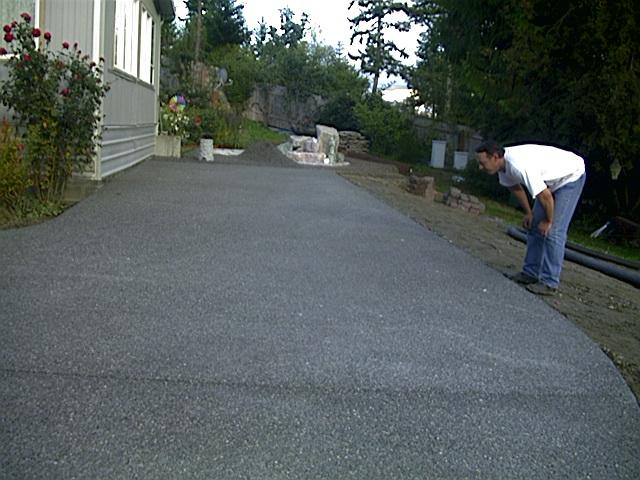
Oh My gosh, after waiting two months we've got our front patio and sidewalk finished.. Now on to the fairy patio & stone wall...Soon to have things in order again...

:-)

B.

PS; Thats "Scotch on the Rocks" using his "MUD-PERTISE" !


Wednesday, September 13, 2006

Busy Bee


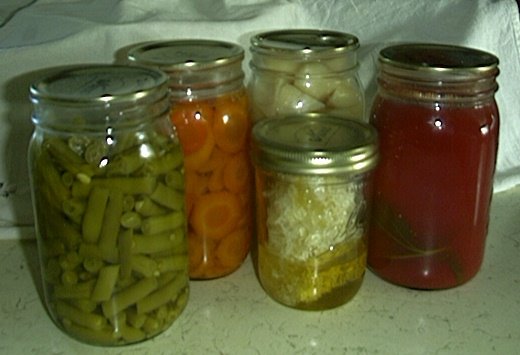
Well, If anyone has wondered were Bee has buzzed off to,**~~**~~ I am in the middle of vegtable canning heaven.. Almost done with the majorityof it...

Here are the photos of the finished goods!!!

Plus one with --->My famous "Honey Wine"

Sparkles
Bee